
Canadian Citizenship
Take the final step from permanent resident to Canadian citizen — application, residency proof and the test, handled properly.
Legally reviewed by Inna Kogan, BA, LL.B., MBA — licensed immigration lawyer, Law Society of Ontario

Canadian citizenship requires meeting the physical-presence requirement, filing an accurate application and passing the test. Residency calculations, absences and tax history trip many applicants up. I make sure your application is complete and defensible, and I respond to residency questionnaires and citizenship refusals.
How Inna helps
- Confirm you meet the physical-presence requirement
- Calculate eligible days and absences correctly
- Prepare a complete, accurate citizenship application
- Respond to residency questionnaires (RQ)
- Challenge citizenship refusals at the Federal Court
Canadian Citizenship
Permanent residents ready to become citizens
Applicants with complex travel or absence history
Those issued a residency questionnaire or refused citizenship
Becoming a Canadian citizen: the last step, done right
For most permanent residents, citizenship is the final goal — a Canadian passport, the right to vote, and security that cannot be taken away by a change in status. The application looks simple, but it turns on a precise physical-presence calculation and a clean record, and mistakes there lead to residency questionnaires, delays and refusals. Inna Kogan, a Toronto citizenship lawyer, makes sure your application is complete, accurate and defensible before it is filed, and steps in when IRCC raises questions.
The physical-presence requirement
To qualify, an adult applicant must generally have been physically present in Canada for at least 1,095 days during the five years before applying, have met tax-filing obligations for the required years, and pass a citizenship test on rights, responsibilities and knowledge of Canada. The presence calculation is where most problems begin: time as a temporary resident before becoming a permanent resident can count partially, absences must be documented accurately, and even an honest miscount can trigger scrutiny.
- Calculating eligible days, including partial credit for pre-PR time in Canada
- Documenting travel history and absences so they withstand review
- Confirming tax-filing obligations are met for the required years
- Preparing for the citizenship test and, where required, the interview
- Filing a complete application that avoids a residency questionnaire
Residency questionnaires and citizenship refusals
When IRCC doubts an applicant’s physical presence, it issues a residency questionnaire (RQ) demanding extensive proof — leases, employment records, travel history, and more. An RQ can add many months to a file, and a weak response can lead to refusal. Inna Kogan builds thorough, well-organized RQ responses that answer the officer’s concerns directly. Where citizenship is refused or a file is unreasonably delayed, she challenges the decision at the Federal Court through judicial review or Mandamus.
Applicants with complex histories — frequent travel, time abroad for work, or an earlier immigration issue — benefit most from getting this right the first time. A refusal or an RQ is far harder and slower to fix than a clean, well-prepared application.
Citizenship help across Toronto and the GTA
Inna Kogan serves permanent residents across Toronto, Mississauga, Brampton, North York, Scarborough, Vaughan and Markham, in English, Ukrainian and Russian. Whether you are ready to apply, facing a residency questionnaire, or dealing with a refusal, book a consultation for a clear assessment of where you stand and the fastest path to your citizenship.
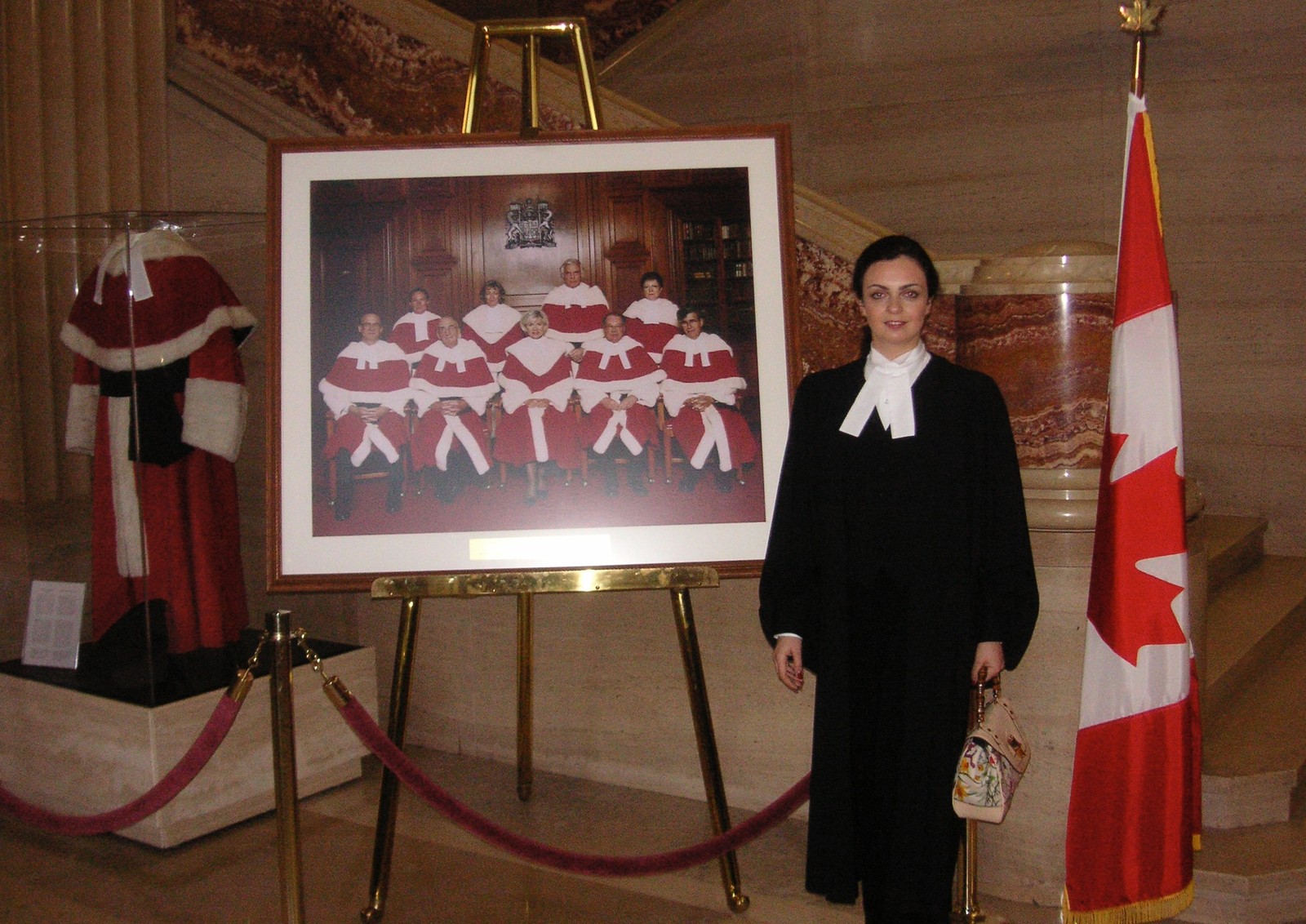
We go to court — and we win
A refusal is not the end. Inna Kogan regularly overturns visa refusals and forces long-delayed files to a decision at the Federal Court of Canada.
Appeal a refusalThree simple steps to your consultation
Request a consultation
Fill out the form on this page and leave your contact details.
Receive your questionnaire
I email you a short questionnaire — please check your spam folder too.
Confirm your Zoom
You receive an invitation to meet Inna online. Confirm it, and we begin.

Canadian Citizenship — questions & answers
How many days do I need to become a Canadian citizen?
An adult applicant generally needs at least 1,095 days of physical presence in Canada during the five years before applying. Time spent in Canada as a temporary resident before becoming a permanent resident can count partially, up to a limit. Accurate day-counting is essential to avoid delays.
What is a residency questionnaire (RQ)?
An RQ is a request from IRCC for extensive proof of your physical presence in Canada — leases, employment records, travel history and more — issued when an officer doubts your residency. It can add many months to a file, and a strong, well-documented response is critical to avoid refusal.
Can a citizenship refusal be challenged?
Yes. A citizenship refusal can be challenged by judicial review at the Federal Court, and a citizenship application delayed unreasonably can be moved with a Mandamus. Inna Kogan, as a licensed lawyer, handles both.
Do I need a lawyer to apply for citizenship?
Many applicants apply on their own, but a lawyer is valuable when your travel or absence history is complex, when you have received a residency questionnaire, or when a prior application was refused — the situations where errors are costly and hard to reverse.
Does time in Canada before permanent residence count?
Yes, partially. Time spent physically in Canada as a temporary resident (for example on a work or study permit) in the five years before applying can count as half-days toward the physical-presence requirement, up to a maximum of 365 days. Calculating this correctly can determine whether you qualify now or must wait.
Book a personal consultation with Inna
Leave your details and I will send you a questionnaire and a Zoom invitation.
Book a personal consultation with Inna
Leave your details and I will send you a questionnaire and a Zoom invitation.
Ready to move forward?
Book a personal consultation with Inna and get a clear, honest assessment of your case.
Book a Consultation